
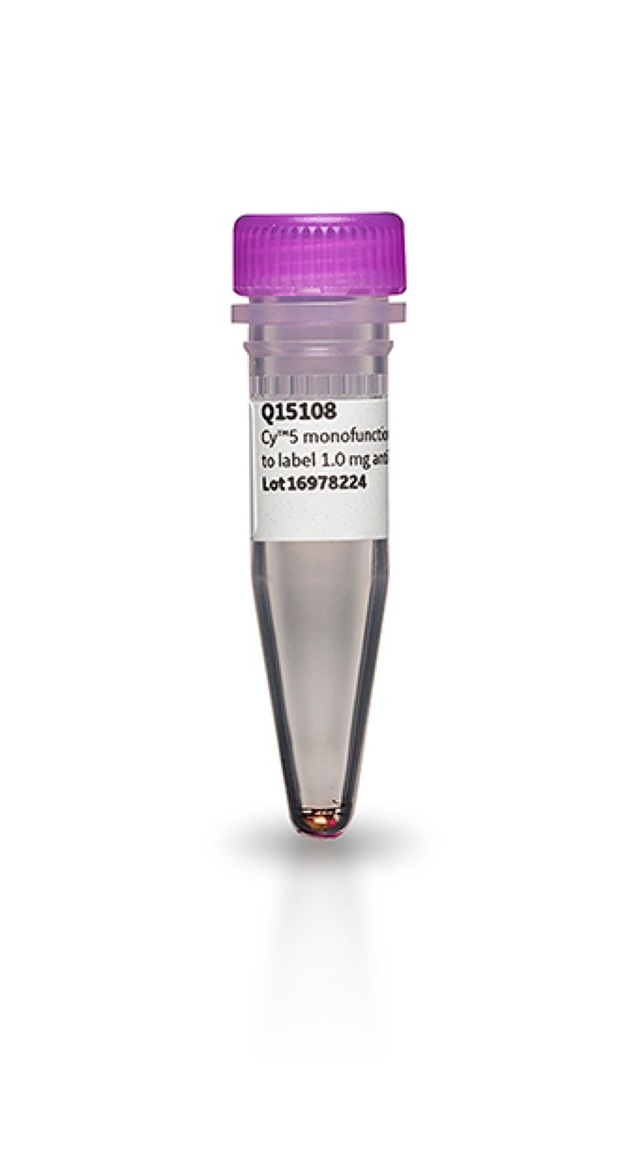
Cytiva's Whatman™ PA23031 Cy3 Maleimide Mono-Reactive Dye for Labeling of Biological Compounds with Cy3 Monofunctional Dye (Pack of 5)
Item Number:WHA-PA23031
Manufacturer Part No:PA23031
Manufacturer:Cytiva and Pall Life Science
Units:Sold Individually
Details
- Provides an alternative when CyDye NHS Esters are unsuitable
- Max Absorbance: 550nm, Color: Red
- Components: Five foil packs each containing dried dye to label 1mg of protein
- Lifetime: <0.3ns, Storage Conditions: 2 - 8°C, protected from light
- MolecularWeight (Mr): 791, Quantum Yield: >0.15
- Sold Individually
More selective method of antibody labeling that reduces the possibility of the label interfering with subsequent antibody-antigen reactions. Provides an alternative when CyDye NHS Esters are unsuitable. Dyes are packaged in premeasured amounts and foil-sealed to ensure consistent labelings. Cy3 and Cy5 mono-functional maleimides are particularly suitable for the selective labeling of molecules containing free sulfhydryl groups, such as cysteine residues in proteins and peptides and oligonucleotides. They are also useful in antibody labeling since the dye molecules are introduced away from the antibody binding site, increasing the chance that functionality of the labeled molecule will be unimpaired. The protocol is simple and robust, offering an alternative chemistry when either greater selectivity of labeling is required or amine labeling with Cy3 and Cy5 NHS Esters is not desirable or appropriate. Each kit contains five vials of dye, each sufficient for labeling 1 mg of protein.
Documents & Videos
More selective method of antibody labeling that reduces the possibility of the label interfering with subsequent antibody-antigen reactions. Provides an alternative when CyDye NHS Esters are unsuitable. Dyes are packaged in premeasured amounts and foil-sealed to ensure consistent labelings. Cy3 and Cy5 mono-functional maleimides are particularly suitable for the selective labeling of molecules containing free sulfhydryl groups, such as cysteine residues in proteins and peptides and oligonucleotides. They are also useful in antibody labeling since the dye molecules are introduced away from the antibody binding site, increasing the chance that functionality of the labeled molecule will be unimpaired. The protocol is simple and robust, offering an alternative chemistry when either greater selectivity of labeling is required or amine labeling with Cy3 and Cy5 NHS Esters is not desirable or appropriate. Each kit contains five vials of dye, each sufficient for labeling 1 mg of protein.